Reviewing Dog Christmas Clipart for Embroidery
As a designer who has spent countless hours digitizing and stitching out holiday motifs, I have learned that not every cute graphic translates well to thread. When I first pulled up the Dog Christmas Clipart file on my screen, my initial reaction was one of cautious optimism. The illustration style is charming, capturing that warm, festive spirit we all look for in December projects. However, seeing a digital image is vastly different from watching it stitch out on a hoop. My job here is to bridge that gap, evaluating whether this asset holds up under the needle or if it remains merely a pretty picture best left for print.
First Impressions and Visual Personality
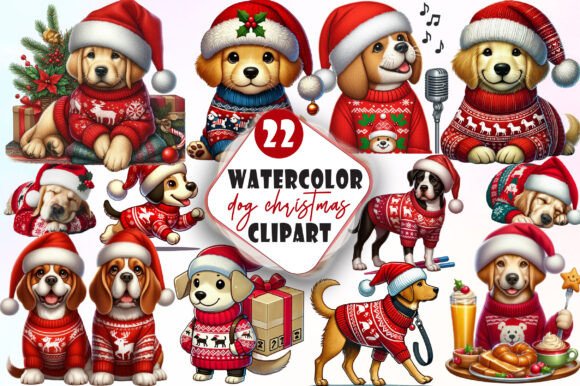
The mood of this design is undeniably cozy. It features a canine subject adorned with seasonal elements, likely a scarf or hat, rendered in a style that balances detail with simplicity. For embroidery, this balance is critical. Overly complex illustrations often result in muddy stitches, while overly simple ones can look amateurish. This particular piece sits in a sweet spot. The lines are clean, and the shapes are distinct enough to be recognizable even when reduced in size. As an Illustrations asset, it has strong visual personality, but as a potential machine embroidery design, it requires careful consideration of how those lines convert to satin and fill stitches.
I immediately thought about where this would fit in a product line. It does not scream "high-end luxury," but it certainly whispers "heartfelt handmade." This makes it ideal for personalized gifts and small shop products where the value lies in the sentiment rather than intricate technical prowess. The layout feels balanced, suggesting that the original artist understood composition, which usually translates well to digitizing if done correctly.
Real-World Application: The Holiday Tote Test
To truly evaluate Dog Christmas Clipart, I imagined a specific real-life scenario: preparing a custom embroidered tote bag for a client’s holiday gift exchange. Tote bags are notoriously tricky because the canvas texture can interfere with fine details. I pictured this design stitched onto a natural cotton canvas. The contrast between the thread colors and the fabric would be key. If the dog has dark fur, using a light background fabric ensures the silhouette pops.
In this context, the design performs well because it is not overly dense. A heavy fill stitch area on a tote bag can cause puckering if the stabilizer is not robust enough. Assuming the digitizer has used appropriate underlay and moderate stitch density, this clipart would sit flat and look professional. It would also work beautifully on a sweatshirt, where the fleece fabric provides a soft bed for the threads, making the embroidery feel plush and integrated into the garment rather than just sitting on top.
Navigating Fabric and Hoop Constraints
While the design is versatile, there are places where you must proceed with caution. If you are planning to use this on a curved surface like a cap, you need to check the width of the design against your hoop size. Caps have limited vertical space, and if the dog’s ears or hat extend too far, you might run into hoop burn or distortion. Similarly, on stretchy fabrics like jersey knits for baby clothes, a design with large solid areas can pull the fabric if the stitch density is too high.
For baby embroidery, comfort is paramount. I would recommend testing the design on scrap fabric first to ensure there are no sharp edges or dense clusters that could irritate sensitive skin. If the original clipart includes tiny details, such as whiskers or small decorative buttons on a scarf, these might get lost or break during washing if they are digitized as single running stitches. In such cases, simplifying the design or opting for an applique design approach might be smarter. Applique allows you to use fabric for the main body of the dog, reducing stitch count and adding a lovely textural contrast that customers often appreciate in boutique branding.
Commercial Viability and Brand Consistency
For Etsy sellers and craft business owners, the visual appeal of a product directly impacts buyer engagement. Dog Christmas Clipart has a friendly, approachable vibe that builds customer trust. It feels safe and joyful, which is exactly what shoppers want during the holidays. When used in printable mockups or digital product previews, it stands out without being aggressive. However, professionalism comes from consistency. If your brand is known for minimalist, modern designs, this whimsical clipart might feel out of place. But if your small shop product line focuses on traditional, homey aesthetics, this design is a perfect fit.
It is also worth considering how the design looks in black and white. Before committing to a full production run, I always strip away the color to check the structural integrity. Does the shape hold up? Are the contours clear? If the design relies too heavily on color gradients to define its form, it will fail in embroidery, which uses solid thread colors. A good embroidery file should be readable even in monochrome.
Practical Designer Notes for Execution
Before you load this into your machine, take a moment to review the technical specs. Since I do not have the exact file details here, you must check the stitch count and recommended hoop size provided by the creator. High stitch counts on small hoops can lead to excessive perforation of the fabric. Always use the proper stabilizer; for woven fabrics like aprons or tea towels, a cut-away stabilizer offers the best long-term durability, especially for items that will undergo frequent washing.
Thread color choice can make or break this design. Do not just pick standard red and green. Look at the specific shades in the clipart. A deep burgundy might look more sophisticated than bright red, and a forest green can add depth. Test your thread colors on the actual fabric you intend to use. Lighting in photos can distort colors, so physical testing is non-negotiable for high-quality finished products.
Finally, confirm the licensing terms. Just because you bought the digital embroidery file or the clipart does not automatically grant you commercial rights to sell the finished item. Many creators offer separate licenses for personal and commercial use. Ensure you are compliant to protect your craft business from legal issues. If you are creating a custom apparel line or selling embroidered patches, having the right license is as important as having the right thread tension.
In conclusion, Dog Christmas Clipart is a promising asset for holiday projects. It brings warmth and character to handmade products, from nursery decor to personalized gifts. With careful attention to fabric choice, stabilizer selection, and stitch optimization, it can elevate your seasonal offerings. Treat it not just as an image, but as a blueprint for texture and form, and it will serve your creative entrepreneurship well.